
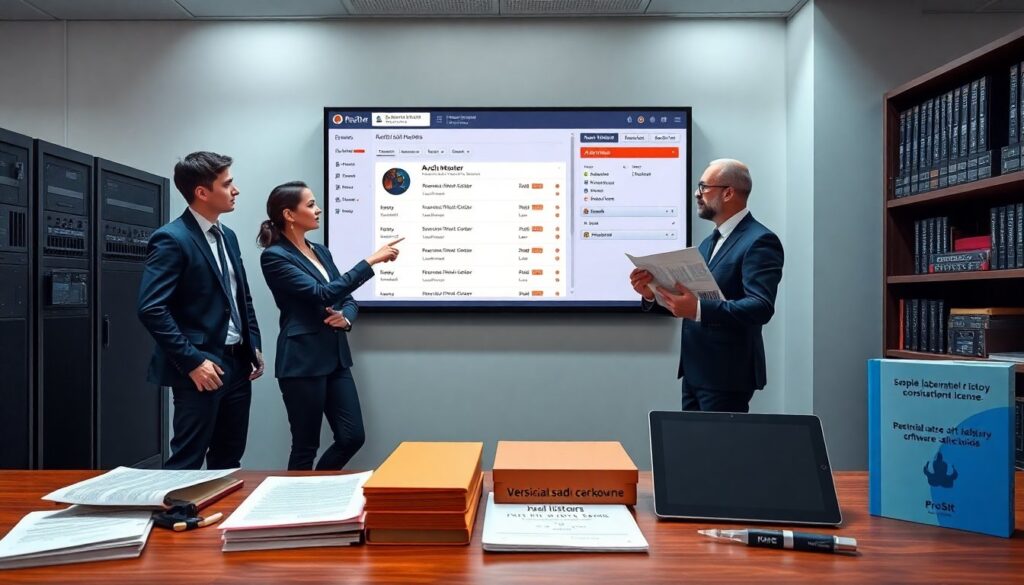
ProSiteSite music technology archives provide primary digital materials for music research. The archive stores recordings, software builds, technical notes, and metadata. Researchers access the archive for historical study, teaching, and production work. The guide explains what the archive holds, how users search and assess content, and how users handle downloads and preservation. The text stays practical and direct.
Key Takeaways
- ProSiteSite music technology archives offer a rich collection of audio masters, software builds, metadata, and oral histories crucial for music research and production.
- Researchers and educators can efficiently search, filter, and evaluate content using metadata and version histories to support teaching, research, and production needs.
- The archive provides practical materials like annotated recordings, datasets, and synth presets to enhance classroom learning and professional sound design.
- Users must verify licenses, checksums, and provenance when downloading to ensure proper reuse and preservation of digital artifacts.
- Citing archive materials with persistent identifiers and maintaining backup copies using open formats are essential best practices for digital preservation.
- Collaboration is encouraged through shared workspaces and versioned deposits, with the archive supporting citation and legal verification for reuse.
What ProSiteSite’s Music Technology Archives Contain And Who They Serve
ProSiteSite music technology archives contain audio masters, project files, software binaries, research reports, and metadata records. The archive stores lab notes, patch lists, interface designs, and dataset exports. The archive also hosts oral histories and interviews with engineers and composers. The archive serves academics, students, sound designers, educators, and independent producers. The archive supports teaching by supplying example datasets and annotated recordings. The archive supports research by offering versioned software and changelogs. The archive supports production by providing reusable samples and synth presets. The staff maintains access policies and usage guidelines. The staff updates metadata to match current standards. The archive indexes content by date, creator, instrument, and format. The archive preserves source code with commit histories when available. The archive links related items through persistent identifiers.
How To Search, Navigate, And Evaluate Archive Content Efficiently
A researcher approaches ProSiteSite music technology archives with a clear query. The researcher enters keywords, creator names, or file formats in the search box. The system returns ranked results with filters for date, format, and license. The researcher narrows results with filters for audio type, software platform, and access level. The researcher previews audio and inspects metadata fields before downloading. The researcher checks file checksums and format notes to verify integrity. The researcher reads usage notes and rights statements to confirm reuse permissions. The researcher compares multiple versions to trace changes across releases. The researcher inspects accompanying documentation to assess provenance and context. The researcher evaluates quality by checking sample rates, bit depth, and encoding details. The researcher flags errors or missing metadata and reports them to archive staff. The repository supports batch export for large result sets. The system offers an API for scripted queries and metadata harvesting. The search logs help the archive staff tune relevance and fix gaps. The archive adds persistent identifiers to aid citation and long-term discovery.
Practical Ways To Use Archive Materials In Research, Teaching, And Production
An instructor selects items from ProSiteSite music technology archives for classroom demonstrations. The instructor pairs recordings with annotated scores and lab notes. The instructor assigns students to analyze format differences and metadata quality. A researcher mines the archive for datasets to train models or to test algorithms. The researcher reuses annotated audio to validate reproducibility claims. A producer samples archive audio for sound design and remixes, following license terms. A curator assembles thematic collections for exhibits or publications. A student compiles a portfolio with documented provenance drawn from the archive. A developer studies legacy code and builds compatibility layers or emulators. A teacher builds hands-on labs using archived synth presets and software builds. A lab documents experiments by storing processed outputs back in the archive with clear metadata. The archive supports collaboration by enabling shared workspaces and versioned deposits. The archive facilitates citation by providing recommended citation text and identifiers. The archive helps users confirm legal status and attribution before reuse.
Best Practices For Downloading, Citing, And Preserving Digital Artifacts
Users download files from ProSiteSite music technology archives after verifying license and checksum. Users maintain local copies and record provenance fields in a separate manifest. Users keep original files unchanged and work on copies to avoid corruption. Users annotate each item with project notes, version numbers, and derivation links. Users cite archived items using the archive’s recommended citation format and persistent identifier. Users include access dates and checksum values in citations when applicable. Users store backups in at least two different storage locations with periodic integrity checks. Users prefer open, well-documented formats such as WAV, FLAC, and plain text for long-term access. Users export metadata to standard schemas like Dublin Core or JSON-LD for interoperability. Users deposit derived works back to the archive when license permits, and users attach clear provenance statements. Users follow archive embargo and restriction policies and request extensions when needed. Users contact archive staff for preservation guidance on complex objects or proprietary formats.