
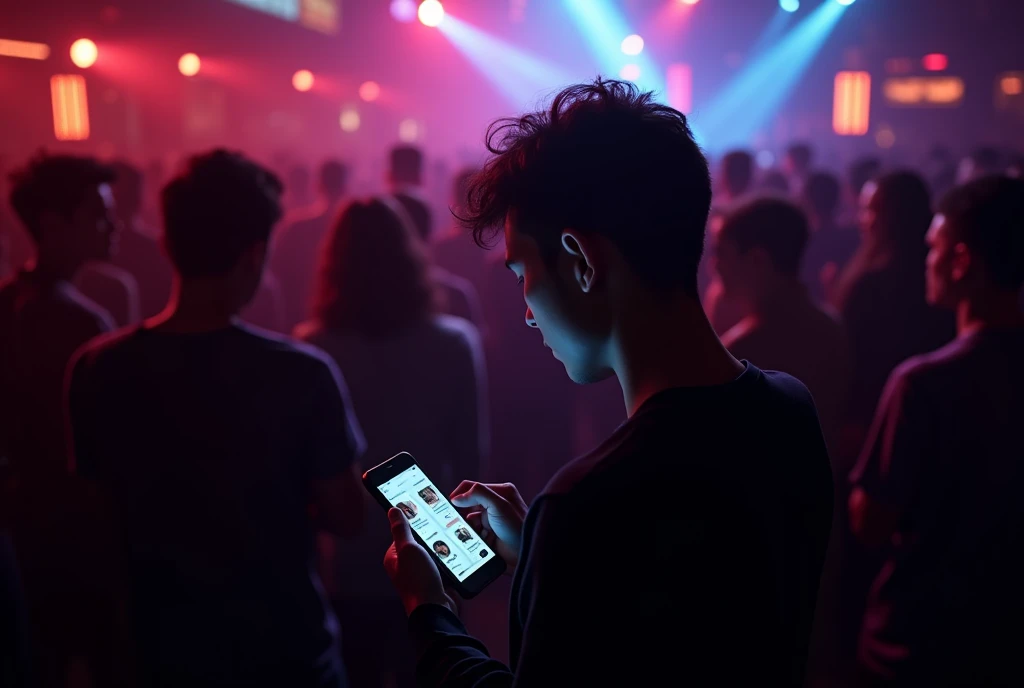
Friday night, River North, Chicago, 11:50 PM. The line outside is short, the bass already audible through the door. Inside, the shift happens instantly. Tempo, lighting, and crowd density define how decisions unfold. A group moves from the bar toward a quieter corner, phones come out, quick searches begin. Within seconds, options narrow based on proximity, availability, and timing. A query like chicago escort appears in that flow not as a separate intent, but as part of the same sequence shaped by sound, pace, and environment. The louder the room, the faster the decisions. No one scrolls for long. Selection happens in rhythm with the space.
Tempo sets the pace of decisions
Music speed directly affects how long users stay in any decision loop. Faster BPM reduces dwell time. Slower tracks extend it slightly, though not enough to change behavior entirely. In venues where tempo stays above 120 BPM, users move through options quickly and commit faster.
Observed patterns across nightlife venues:
- Decision time drops below 10 seconds when BPM exceeds 120
- Switching between options increases as volume rises above 85 dB
- Users abandon longer profiles in high-tempo environments
Sound does not just create atmosphere. It shortens the window for choice and pushes toward immediate action.
Lighting controls visibility and focus
Low light changes how information is processed. Screens become the primary source of clarity. Users rely on contrast and simple layouts because detailed reading becomes impractical.
Key effects of lighting conditions:
- High contrast visuals outperform detailed layouts
- Minimal text increases interaction speed
- Bright screens dominate attention over surroundings
In darker environments, complex interfaces fail. Simplicity becomes a functional requirement rather than a design preference.
Crowd density influences selection behavior
Space inside a venue shapes how people interact with devices. In crowded areas, physical constraints reduce the time and attention available for browsing. Users make faster decisions to minimize exposure and movement.
Measured impact of crowd density:
- Higher density reduces interaction time per screen
- Users prefer options that require fewer steps
- Quick confirmation actions increase as space tightens
The closer people stand to each other, the less time they spend evaluating. Selection becomes immediate.
Sound and environment create urgency
Noise levels and spatial pressure combine to create a sense of urgency. The environment does not allow prolonged hesitation. Decisions align with the pace of the room.
Typical behavioral responses:
- Rapid scrolling with minimal pauses
- Preference for top-ranked or first-visible options
- Immediate confirmation once a viable choice appears
The system rewards listings that communicate instantly. Anything that requires effort loses relevance.
Presentation adapts to nightlife conditions
Listings that perform well in nightlife contexts follow a different logic than daytime browsing. Visual clarity, fast loading, and immediate availability indicators carry more weight than detailed descriptions.
Critical presentation factors:
- Strong visual hierarchy with clear primary elements
- Instant visibility of availability and timing
- Minimal text that confirms key details
- Fast loading under unstable network conditions
Complex layouts fail in these environments. The user does not adjust to the interface. The interface must match the environment.
User intent narrows under pressure
Intent becomes sharper as environmental pressure increases. Users arrive with a general idea, yet finalize decisions quickly based on what is accessible at that moment.
Common intent patterns:
- Immediate availability within a short time window
- Preference for nearby options over distant ones
- Minimal interaction before confirmation
The gap between search and action shrinks. The environment removes space for reconsideration.
 Trust depends on instant clarity
Uncertainty slows decisions. In high-energy environments, even a small delay leads to abandonment. Users look for signals that confirm reliability without requiring verification.
Trust indicators in nightlife contexts:
- Clear and consistent visuals across listings
- Real-time updates that match current conditions
- Absence of conflicting or outdated details
- Fast response after selection
Trust is built in seconds. It either exists immediately or not at all.
Where nightlife behavior is heading
Urban nightlife continues to compress decision cycles. Music, lighting, and crowd dynamics shape how people interact with services in real time. The system adapts by reducing steps and prioritizing relevance.
Three directions define the shift:
- Faster interaction cycles aligned with environmental tempo
- Reduced complexity in presentation and selection
- Stronger emphasis on immediate availability
Nightlife does not expand choice. It accelerates it. The experience is shaped less by what is offered and more by how quickly it can be understood and selected.