
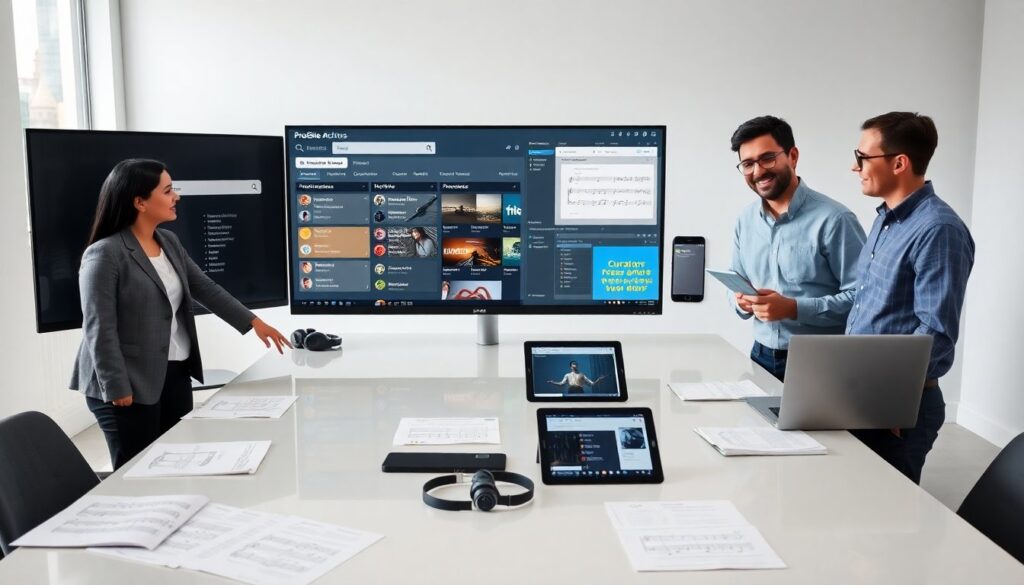
music theory composition archives prositesite appear in one searchable library. The site lists scores, lessons, sample tracks, and software tools. The archive serves students, teachers, and composers. They access items by skill level, format, and license. This guide explains what the archive holds and how they can add the resources to a daily workflow.
Key Takeaways
- ProSiteSite’s music theory composition archives offer diverse resources like scores, lessons, MIDI files, and DAW templates, organized by skill level and format for easy access.
- Users can efficiently search, filter, and preview materials by composer, technique, or file type, enhancing workflow integration with tools like notation software and DAWs.
- The archive supports skill progression with starter packs and advanced study sets, helping composers and students develop from basic exercises to full scoring.
- Clear licensing and attribution guidelines protect users and contributors, emphasizing license verification, sample clearance, and proper credit in projects.
- ProSiteSite enables educators to streamline teaching by assigning scores, videos, and DAW templates, while supporting group sharing and usage tracking.
- A recommended reuse checklist—including license confirmation, documentation of edits, and preservation of originals—helps users minimize legal risks and respect contributor rights.
What The Archives Contain — Collections, Formats, And Skill Levels
ProSiteSite stores a wide set of resources. The archive lists scores, lesson files, MIDI examples, video tutorials, and plugin presets. The archive tags items by genre and by era. The archive marks items as beginner, intermediate, or advanced. The archive also groups complete collections, such as counterpoint studies, orchestration sets, and film scoring packs.
The archive uses common file formats. The archive offers PDF scores, MusicXML files, MIDI tracks, WAV stems, and MP4 lessons. The archive supplies notation images and layered stems for DAW use. The archive includes template sessions for major DAWs. The archive includes annotations and performance notes where authors provide them.
They find practical value in mixed-format sets. A score plus a MIDI file lets a user study notation and hear the example. A lesson video plus project files lets a user open the project and test ideas immediately. The archive includes descriptor tags for tempo, key, instrumentation, and duration. Those tags help users pick material that fits lesson plans or composition deadlines.
ProSiteSite curates material from multiple contributors. The archive lists university faculty, independent teachers, professional composers, and student contributors. The archive highlights vetted items with a curator badge. The archive also shows recent uploads and popular downloads. The archive shows view counts and user ratings so they can judge usefulness quickly.
The archive supports skill progression. The archive offers starter packs for basics such as rhythm, intervals, and chord progressions. The archive offers study sets for form, counterpoint, and orchestration. The archive also offers analysis scores that show harmonic reduction and voice-leading notes. The archive helps users progress from simple exercises to full-score practice.
How To Search, Filter, And Integrate Archive Resources Into Your Workflow
Users open the archive and type queries in the search bar. They type composer names, technique names, instrument names, or file formats. They filter results by skill level, license type, file format, and contributor. They sort results by relevance, date, or popularity. They save searches and they subscribe to tags to receive updates.
They preview files before download. The archive streams audio and video previews. It renders PDFs in the browser and it plays MIDI with a default soundfont. They inspect metadata fields such as tempo and instrumentation to confirm the fit. They download only the formats they need to reduce storage use.
They integrate downloads into daily work. They import MIDI and stems into a DAW and they load MusicXML into notation software. They open project templates and they swap in their own instrument patches. They print annotated scores for score study and they use stems for reference mixes. The archive encourages modular use: they can reuse motifs, reharmonize a phrase, or extract an orchestration idea.
They build a personal archive on top of ProSiteSite content. They create folders and notes inside the site. They tag items for lesson plans and composition projects. They link archive items to task lists and to calendar sessions. The archive exports lists in CSV for offline tracking.
They add archive resources to teaching plans. They assign scores for sight-reading and they attach lesson videos as assignments. They provide students with DAW template files so students can focus on the musical goal. The archive supports group use: it creates share links and it tracks downloads per access key.
Licensing, Attribution, And Practical Best Practices For Reusing Archive Material
ProSiteSite labels each item with a clear license. The archive shows public domain, Creative Commons variants, and custom licenses. Users read the license before reuse. Users follow license terms for commercial work and for redistribution.
They provide attribution when the license requires it. They copy the suggested attribution text from the item page and they paste it into program notes, product credits, or project readme files. They keep a record of contributor names, item identifiers, and download dates for legal and archival purposes.
They check for embedded sample clearance. Some archive items contain third-party samples or loops. They verify sample clearance before using a track in a commercial release. They contact the contributor or the archive support team when samples look unclear.
They favor editable formats for deep reuse. They choose MusicXML or MIDI when they plan to edit harmony or orchestration. They keep original files for audit trails and they export revised versions for distribution. They document edits in a changelog to preserve transparency.
They respect contributor terms in educational use. They request classroom licenses when they need bulk access or when they plan to distribute copies. They link to the archive item rather than rehosting files when license terms permit link-only sharing. They credit contributors in syllabus files and in course webpages.
They follow a simple checklist before release: confirm license, confirm sample clearance, prepare attribution text, document edits, and archive the original files. They follow that checklist for every reused item to reduce legal risk and to honor contributor work.
They contact ProSiteSite support for complex cases. The archive staff answers licensing questions and they assist with permissions. The archive records correspondence to support future audits and to clarify reuse rights.